Analyzing Anne Bonny's Timeline
Sunday, March 22, 2026 - 08:00
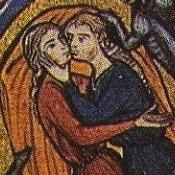
Even more than Mary Read's "origin story," the backstory given for Anne Bonny's birth is complicated, farcical, and implausible. Similarly to Read, she is given an excuse for later cross-dressing in having been disguised as a boy at an early age. (This motif shows up in other cross-dressing biographies and is a way of absolving the woman of deliberate gender transgression. But the details of Anne's pirate career include massive contradictions, especially around her gender presentation and the timelines of her supposed pregnancy(s). I mean, if your pirate boyfriend drops you off in Cuba to give birth to his baby, doesn't that rather imply that the entire crew would know you were a woman? Anyway...
Major category:
Full citation:
Johnson, Charles (pseudonym). 1724. A General History of the Pyrates: from their first rise and settlement in the Island of Providence, to the present time. With the remarkable actions and adventures of the two female pyrates Mary Read and Anne Bonny ... To which is added. A short abstract of the statute and civil law, in relation to pyracy. London: T. Warner.
Publication summary:
A presentation and analysis of material related to Anne Bonny and Mary Read in the General History of the Pyrates, with additional material from journalistic and legal records.
Part 7: Analysis of the Anne Bonny Narrative
As done for Mary Read, here’s a highly speculative timeline structured around key events in the General History narrative, though there are fewer anchor points to specific dates. (Both women’s narratives make reference to things like the King’s Pardon, but in ways that don’t align well with the known timelines.) I’ve included some details from the 2nd edition which elaborate on events but don’t add substantial changes to the timeline. Many of the dates are vague estimates based on trying to coordinate descriptions in the General History to documented historic events. As before, I’ve converted years to the Gregorian system to avoid confusion for current readers.
- Vague estimate early 1703?: Anne is born in Ireland. Calculated based on an estimated date and age for her marriage.
- Vague estimate 1708: About 5 years after Anne is born, her father brings her into his household disguised as a boy to avoid acknowledging her.
- Vague estimate 1710?: Anne’s father moves to Carolina with her and her mother. (Scots-Irish emigration to the colonies had begun in earnest a couple years earlier, so this date would be plausible.) Her father practices law, then turns merchant, then buys a plantation. (Quite the meteoric career!)
- Vague estimate 1715?: Anne’s mother dies and she begins keeping house for her father.
- Vague estimate early 1718?: Anne marries James Bonny and leaves Carolina for the Bahamas. If Anne was “very young” when she met Rackham, maybe a year later, then we might estimate that Anne is around 16 at this time, a not implausible age for marriage in that context.
- November 24, 1718: Rackham is first mentioned as part of Captain Vane’s crew. This presumably marks a date when he had not yet encountered Anne.
- Late 1719: Rackham returns to Bahama with a couple of captured ships.
- May 1719: Rackham and crew go to Providence to take advantage of the General Pardon. (As the King’s Pardon deadline was the previous autumn, either it was extended or this event is fictitious. Rackham’s bio indicates the pardon happens before meeting Anne, but Anne’s bio indicates the pardon happens after her pregnancy.)
- Shortly after May 1719: Anne’s husband James Bonny was one of Rackham’s pardoned crew. She meets Rackham. Rackham’s bio says Anne is “very young” at this time. (No James Bonny is in evidence in any of the trial records, but as the formal records only begin late in 1720 he could have quit the profession before that.) Rackham courts her and she agrees to go to sea with him wearing male clothing.
- Date unclear: At some point after this is the erotic encounter with Mary Read who has also joined the crew, but the sequence can’t be pinned down.
- Approximately February 1720: “After some time” Anne becomes pregnant and is left in the care of friends in Cuba. She has the child then rejoins Rackham. In Rackham’s bio it says he spends “a considerable time” in Cuba where he “kept a little kind of a family.” If Anne became pregnant almost immediately after taking up with Rackham, then the earliest date of the birth would be around this time.
- Date unclear: Rackham joins a privateer ship to attack the Spanish to gain money to support Anne. Then he returns to Providence and lives there with Anne, but the chronology of various events around this is unclear.
- Date unclear: Rackham and Anne leave Providence due to official disapproval of Anne’s loose morals. They seize a sloop belonging to John Haman to return to piracy. (Note: the trial records make no mention of a John Haman and this appears to be well earlier than the documented attacks in the trial records.)
- Late July 1720: The earliest hypothetical date that Anne could have become pregnant if she was, indeed, pregnant during her trial but had not yet given birth. (The claimed pregnancy could easily have been fictitious.)
- August 1720: Rackham returns to piracy after spending time ashore.
- September 1, 1720 (from the trial record): Anne agrees to turn pirate with Rackham. (This need not be in conflict with the General History’s much earlier date of her piratical career if it’s simply an arbitrary date used by the court.)
- September-October 1720 (from the trial record): Various acts of piracy by the Rackham crew, culminating in their capture in late October.
- November 28, 1720 (from the trial record): Anne Bonny is tried for piracy.
As with the “origin story” for Mary Read, the elaborate soap-opera narrative around Anne’s birth not only includes details that would only be known to the participants, but reports of the secret actions and interior states of mind of people who were dead by the time of Anne’s trial for piracy. The narrative about Anne’s mother, the stolen spoons, the bed-switching shenanigans, and the consequences involving inheritance take up three times more space than the part of the narrative about Anne’s piracy career. As with Mary’s origin story, it’s exactly the sort of sexual farce that was popular on stage and in novels at the time.
When we ask “how could Johnson hypothetically have learned this story, if we assume it was true?” we need to consider it in parts. The wife (who is never named—in fact the only name other than Anne’s mentioned in this part of the narrative is that of Anne’s mother Mary, which is given in quoted speech) had access to her own beliefs about what happened, to what the servant’s (Anne’s mother’s) suitor reported to her about his little “joke” with the spoons, and was presumably the sole person who knew about her anonymous tryst with her own husband, by which he suspected her of adultery. (She could hypothetically have explained it to her mother-in-law, but if so, then why wouldn’t that knowledge have been used to leverage a reconciliation? And then the mother-in-law died, so she wasn’t a possible reporter at a later date.) The wife disappears from the story when Anne’s father leaves for Carolina. In order to be Johnson’s information source, he would have needed to track her down. As no specific details of the names or town are recorded, this possibility seems tenuous. (Was “Bonny” Anne’s married name or maiden name? If the former, that would add another layer of difficulty in tracking down her antecedents.)
Anne’s mother (the servant) died after the move to Carolina, and would have known the details of her own actions around the theft of the spoons. Did she relate those details to Anne’s father? Or to Anne herself? Possibly, although, once more, the detail about the wife using the servant’s bed the night of the anonymous tryst would have changed the circumstances if made known to the father, and that was something the servant did know. But any conduit for the servant’s knowledge would necessarily lead through another person.
Could Johnson have tracked down Anne’s father in Carolina and interviewed him for details? The narrative claims “Her Father was known to a great many Gentlemen, Planters of Jamaica, who had dealt with him, and among whom he had a good Reputation; and some of them, who had been in Carolina, remember’d to have seen her in his House; wherefore they were inclined to shew her Favour, but the Action of leaving her Husband was an ugly Circumstance against her.” If we accept this as true, then an informant in Jamaica could potentially have tracked down the father.
Let’s talk about Anne’s father for a bit. In Carolina he’s said to have practiced law and then become a merchant and owner of a “considerable plantation” who had dealings with “a great many gentlemen, planters of Jamaica.” This would seem to make him a man of considerable social standing who presumably would be mentioned in any number of records in Carolina. Those who have researched the question (as quoted in her Wikipedia entry) have found no trace of any man who fits this description.
Could Anne herself have been the informant for the parts of her narrative that either she experienced directly or that might have been communicated to her by her mother or father? We can’t entirely exclude this possibility, as her ultimate fate is not known to be recorded. The General History concludes her narrative with “She was continued in Prison, to the Time of her lying in, and afterwards reprieved from Time to Time; but what is become of her since, we cannot tell; only this we know, that she was not executed.” If she had been a direct informant, would this not have been mentioned, given that other intermediate sources of information are cited in other biographies in the General History? A direct interview with the condemned pirate would surely have been a newsworthy boast!
The details of Anne’s initial marriage, her subsequent relationship with Rackham, her reported pregnancy during that period (with no subsequent mention of the fate of the child), and her demeanor as a pirate are all sketched very briefly. Nor is the supposed erotic encounter with Mary Read mentioned at all in Anne’s part of the narrative, though there is a reference to other details “already hinted in the Story of Mary Read.”
Taken all together, we once again have a narrative that looks like a cobbling together of either existing fictional narratives or ones invented in the style of popular farce, with a bare smattering tying it in to the facts of the trial documents at the end.
This completes the analysis of the material belonging to the single volume of the first edition of the General History. Further information in the following section continues to raise questions of how and from whom the new information was sourced, if one treats it as factual.
Time period:
Event / person:
View comments (0)