Blog
Sunday, July 12, 2026 - 14:27

Major category:
LHMP View comments (0)
The Lesbian Historic Motif Podcast will be open for submissions in January 2027 for short stories in the lesbian historic fiction genre, to be produced in audio format for the podcast, as well as published in text on the website.
I strongly advise authors to review these guidelines thoroughly before submitting. If your submission doesn't meet the requirements, you will have wasted both of our time.
Technical Details
We will accept short fiction of any length up to 5000 words, which is a hard limit. We will be publishing four stories. (If we get some really great flash fiction, there’s the possibility of doubling up if the total meets the word count limit.)
We will be paying professional rates: $0.08/word.
The contract will be for first publication rights in audio and print (i.e., the story must not have appeared in either format previously) with an exclusive one year license. (Exceptions can be arranged by mutual consent for “best of” collections within that term.)
Instructions on how to submit are given below. NO SUBMISSIONS WILL BE ACCEPTED OUTSIDE THE SUBMISSION PERIOD OF JANUARY 2027.
By submitting a story, you are warranting that the work is not generated in part or in whole using Large Language Models such as ChatGPT, etc.
What We’re Looking For
Stories must be set in an actual historic culture--i.e., a specific time and place in history--and the plot and characters should be firmly rooted in that time and place. (No time-travel or past memories, please.)
Stories may include fantastic elements that are appropriate to the historic setting. For example, they can include fantastic or supernatural events or beings that people of that era considered to be real. Or stories may be modeled on the fantastic literature of a specific historic era and culture. The limits to this will necessarily be subjective.
Stories must be set before 1900. We love to see stories that reach beyond the popular settings of 19th century America and England unless you do something new and interesting in them. I try to balance a diversity of settings and if you aren't competing with the rest of the 33% of stories with 19th c Anglophone settings, you have an advantage. [Also: see sensitivity note below.]
Romance is optional, and romance stories should have some other significant plot element in addition to the romance. A developing romance tends to take up a lot of plot space and we've all read a lot of "girl meets girl but they're the only two lesbians in the world." There are great stories that could be done with existing couples, friendly exes, or networks of like-minded women, just for a change.
We are not looking for erotica. Sex may be implied but not described. (It’s difficult to include both erotic content and a substantial non-romantic plot in short fiction. I’d rather that stories focus on the plot and characters.)
Stories should feature lesbian-relevant themes. What do I mean by that, especially given the emphasis the LHMP puts on how people in history understood sexuality differently than we do? This is where we get into “I know it when I see it” territory. The story should feature protagonist(s) who identify as women, whose primary emotional orientation within the scope of the story is toward other women. This is not meant to exclude characters who might identify today as bisexual or who have had relationships with men outside the scope of the story. But the story should focus on same-sex relations. Stories that involve cross-gender motifs (e.g., "passing women," "female husbands") should respect trans possibilities [see sensitivity note below].
Stories need not be all rainbows and unicorns, but should not be tragic. Angst and peril are ok as long as they don’t end in tragedy.
Authors of all genders and orientations are welcome to submit. Marginalized authors are strongly encouraged to submit, regardless of whether you are writing about your own cultural background.
If you want a somewhat less formal discussion of what sorts of stories really catch my eye, I wrote a blog about that.
Please feel free to publicize this call for submissions.
Submission Information
Do not send submissions before January 1, 2027 or after January 31, 2027. Submissions sent outside this window will not be considered (with allowance for time zones).
You should not re-submit a story that has previously been rejected, unless you have prior approval to do so. "Prior approval" could mean "when I rejected it previously, I said that I'd love to consider it again if you addressed X, Y, and Z." It can also mean, "Before you send it to me, you email me explaining when it was submitted previously and asking if I'd like to see it again." It especially helps if you've worked to make it even better than it was before, because the overall quality of the submissions goes up every year and you'll have stiff competition.
Simultaneous submission (i.e., having the story out under consideration at more than one market) is ok, but explain that in your cover letter. My turn-around time for acceptances is short enough that it's unlikely to be a problem for me.
Send submissions to hrjones@me.com
Submit your story as an rtf or doc(x) file attached to your email
The file name should be “[last name] - [story title, truncated if long]” (Don't include the brackets! They're there to indicate data fields.)
The subject line of your email should be “LHMP Submissions - [last name] - [story title]”
There is no need to provide a synopsis or biographical information in the cover letter, but it won't count against you if you do.
By submitting your story, you are verifying that the material is your own original work and that it has not been previously published in any form in a publicly accessible context. You are also verifying that you did not use any Large Language Model application (colloquially known as "AI") in any way in creating the story.
Submissions will be acknowledged within 2 days of receipt. If you haven’t received an acknowledgment within 5 days, please query.
Based on previous years, I will generally have the submissions read and responded to within the first week of February. If you haven't received a response by mid-February, please query as the email may have gone astray.
Formatting
Use your favorite standard manuscript format for short fiction with the following additions:
In addition to word count, please provide the date/era of your setting and the location/culture it is set in. (These can be in general terms, but it helps for putting the story in context, especially if it uses a very tight point of view where the time/place are not specifically mentioned in the story.) If you are including fantasy elements and think I might not be familiar with the historic background for those elements, a very brief note in the cover e-mail is a good idea.
If you don’t have a favorite manuscript format, here is a good basic format:
- Use courier or a similar monospaced serif font, 12-point size
- Lines should be double-spaced with paragraphs indented. (Use your word processor’s formatting for this, do not use tabs or manual carriage returns.)
- Do not justify the text, leave a ragged right margin.
- Margins should be at least 1-inch or equivalent all around
On the first page, provide the following information:
- Your name (legal name, the name I’ll be putting on the contract)
- email address
- (standard formats generally require a mailing address but I don’t need one at this point)
- word count (please use your word processor’s word count function, rounded to the nearest 100)
- date/era of story
- location/culture of story
Centered above the start of the story, include the title, and on the next line “by [name to appear in publication]”. This is where you may use a pen name, if you choose.
Please use actual italics rather than underlining for material meant to appear in italics.
Please indicate the end of your story with the word “end” centered below the final line.
As I will be reading stories electronically, there is no need to include page numbers or a header on each page. (If this is part of your standard format, you don’t need to remove them.)
Notes on Sensitivity
I strongly welcome settings that fall outside the "white English-speaking default". But stories should avoid exoticizing the cultural setting or relying on sterotypes or colonial cultural dynamics. What does that mean? A good guideline is to ask, "If someone whose roots are in this culture read the story, would they feel represented or objectified?"
What do I mean by "stories that involve cross-gender motifs should respect trans possibilities"? I mean that if the story includes an assigned-female character who is presenting publicly as male, I should have confidence that you, as the author, have thought about the complexities of gender and sexuality (both in history and for the expected audience). It should be implied that the character would identify as a woman if she had access to modern gender theory, and the way the character is treated should not erase the possibility of other people in the same setting identifying as trans men if they had access to modern gender theory. This is a bit of a long-winded explanation, but I simultaneously want to welcome stories that include cross-gender motifs and avoid stories that could make some of the potential audience feel erased or mislabeled.
A note on transfeminine characters: I am completely open to the inclusion of stories with transfeminine characters who identify as women-loving-women. This is a complicated topic for historic stories, though, as this is not a motif with much known historic grounding before the later 20th/21st century. If you're submitting this type of story, you may have to work harder than usual on making it work in the historic context.
Saturday, July 11, 2026 - 08:00
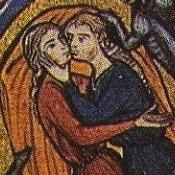
Attention has been drawn to the fact that -- in all of her voluminous journaling -- Anne Lister never identifies with existing terms for women-loving-women, such as "tribade" or "lesbian" (yes, the word existed during her era) and explicitly rejected identification with "sapphic." Some have seen this as a strong argument for viewing her primarily through a transgender lens. But this article points out a different angle: that Lister considered herself to be unique and unprecedented in terms of identity, not only her sexual identity, but her social identity in general. To put it bluntly, she appears to have had a severe case of "not like other girls." Honestly, she was a bit of a snob in various ways, and rejecting the idea that there might be other women "like her," even among the women she knew to have homosexual relationships, fits with that attitude.
Major category:
LHMPFull citation:
Shannon, Laurie. 2023. “A Regular Oddity: Natural History and Anne Lister’s Queer Theory of Tradition” in Decoding Anne Lister: From the Archives to ‘Gentleman Jack’, Chris Roulston & Caroline Gonda, eds. Cambridge University Press, Cambridge. ISBN 9781009280723
Publication summary:
At the time of writing, the ebook of this publication was available through Open Access at not cost at the following url: https://www.cambridge.org/core/books/decoding-anne-lister/E6CFCB182F71891949C4709148422131
Part I: ‘Nature was in an odd freak when she made me’: Lister, Sexuality, Gender and Natural History; 2. A Regular Oddity: Natural History and Anne Lister’s Queer Theory of Tradition by Laurie Shannon
This article traces one aspect of how Lister understood her gender and sexuality, that is, as a “natural” variation that was to some extent unique to her. Rather than projecting modern identity concepts back in time onto Lister, Shannon locates this understanding within the past and present philosophies of Lister’s own time with respect to the concept of “nature.”
[Note: I’m going to digress for a moment on a point that Shannon doesn’t address in particular. Discourse around homosexuality in classical philosophy up through the Renaissance included a theme that it was “against nature” (contra naturem), not so much in the sense of flouting the dictates of a personified Nature – although there was an aspect of that – but in the sense that it was considered part of the inherent nature of all creatures to desire at the opposite sex, and that behavior in contradiction to this went against what was expected to be people’s inherent “nature.” This is relevant to Shannon’s argument, because Lister is introducing a more multivalent concept of the range of inherent natures possible for human beings. That there is no single universal “nature” with regard to gender/sexuality, and thus people can diverge from the normative state without going against their individual “nature.” It’s very much a “born this way” argument but – as we’ll see – does not embrace homosexuality as a “type of person” collectively, but more along the lines of the “individual taste” concept that pops up regularly from classical times onward.]
When Lister writes about how she does and does not fit into society’s expectations along a number of axes, she continually returns to two themes: claiming the identity of “oddity” and asserting that this is her “nature,” connecting the concept with writings about natural history. This contrasts significantly with modern historians’ characterizations of her identity as transgression or non-conformity
The standard approach to natural history – entwined thoroughly with both classical writings and Christian philosophy – saw the world in terms of “creation” and a “creator.” The state of existence was a deliberate and conscious creation of an omnipotent deity, and the characteristics of creatures (= “create”-ures) were neither random nor accidental. [Note: As noted previously, within this understanding, behaviors that were considered “against nature” were thus considered a deliberate rejection of God’s intent, making them a moral failing.]
In developing an understanding of her own “nature,” Lister looked to texts that enumerated and celebrated the diversity of creation and the assignment of different “natures” to different creatures -- “each according to their kind.” Where Lister diverged from more traditional thought was in envisioning the existence of fractally individual “natures” to which one must be true. A person might be “odd” with respect to expectations while still acting according to their own nature.
Lister frequently describes herself -- in her journals or to others – as “odd” or having “my oddity” in the context not only of her sexual desires, but her clothing preferences and behavioral habits. But her oddity, from her point of view, was not a shared characteristic with other women who loved women, but a feature unique to herself. This puts a slightly different spin on Lister’s refusal to identify with terms she encountered in classical literature, such as tribade or fricatrix, or with “sapphist” which she explicitly rejects as an identity. After discussing their shared desire for women with Miss Pickford (an intellectual neighbor in a romantic partnership with another woman) Lister protests in her journal, “she supposed to meet like herself – how she is mistaken.” It seems to have been important to Lister to view herself as unique and special. She quotes one of her literary heroes, Rousseau, in her journal: “I am not made like any of those I’ve seen; I dare to believe not made like any of those who exist.”
Despite Lister’s fixation on uniqueness, “oddity” along with “singular” and “unaccountable” was a regular codeword associated with lesbianism or gender nonconformity in the 18th and 19th centuries (per Caroline Gonda).
The article now shifts to considering how Lister’s “oddity” is depicted in modern media and deployed symbolically by her modern fandom. The next section of the article explores other examples from the 17th to 19th centuries of interpreting “nature” broad-mindedly, or of discussions of divine creation that could be used to support such an interpretation.
Lister’s concept of her “oddity” encompassed more than sexuality. She describes how others responded to “my figure, manner of walking and my voice” commenting that people might notice such things but found them “agreeable.” [Note: We can’t entirely trust Lister’s perceptions here, but at least people told her to her face that they liked her “oddity.”]
Lister’s embracing of her own homosexuality as natural and positive did not extend to all possible flavors of queerness (by modern definition). She disapproves of being “connected to both sexes” (i.e., bisexuality), approving only of a consistent and exclusive desire for a particular sex. She approves only of same-sex desire that is experienced spontaneously and not “done from books.” [Note: I’m trying to envision what she means here, but it might be a reference to pornography.] She distains sex acts that involve anything not “natural.” Her disparagement of “saffic regard” is due to defining this as involving the use of a dildo. Her love is natural and constant; anything involving artifice or inconstancy falls outside her definition of “nature.” Nature might have “been in an odd freak” when creating Lister, but her desires were entirely due to that natural creation, and therefore were beyond judgment. She further notes – when researching anatomical theories of sexuality – that with respect to her own nature, “no exterior formation accounted for it, it was all the effects of the mind.” That is, for herself, she discards the popular idea of an anatomical cause for lesbian desire.
Time period:
Place:
Event / person:
Friday, July 10, 2026 - 16:00
My brief break is over and I have another series of Anne Lister posts coming before moving on to other topics. This is a collection of articles revolving around archival material and/or the relationship between history and popular culture.
These write-ups were done using a combination of hand-written notes and speech-to-text software, due to my broken arm. Although I've tried to do careful proofreading, the speech-to-text generated some systematic errors (like "Lester" for "Lister") and I hope I'll be forgiven if any slip through. I'm back to typing with both hands now (which provides part of my physical therapy exercises) but it's still a bit slow and painful, so it's useful to have a dozen posts all ready to go except for these introductory notes.
Major category:
LHMPFull citation:
Donoghue, Emma, Chris Roulston, & Carolina Gonda. 2023. “Foreward”, “Introduction”, & “Caroline Gonda in Conversation with Helena Whitbread” in Decoding Anne Lister: From the Archives to ‘Gentleman Jack’, Chris Roulston & Caroline Gonda, eds. Cambridge University Press, Cambridge. ISBN 9781009280723
Publication summary:
At the time of writing, the ebook of this publication was available through Open Access at not cost at the following url: https://www.cambridge.org/core/books/decoding-anne-lister/E6CFCB182F71891949C4709148422131
Front Matter (Foreword, Introduction, Conversation with Helena Whitbread)
Foreword by Emma Donoghue
This is the collection of papers based on material from the Lister archives, approached from a variety of angles. [Note: Not all of the material touches on her sexuality, but I will blog everything, though some coverage may be briefer than others.]
The front matter includes a forward by Emma Donoghue, an introduction by Chris Roulston (one of the editors), and a conversation between Carolyn Gonda (the other editor) and Helena Whitbread.
Donoghue gives a brief background to Lister and an exploration of some of the facets of her life that are fascinating to modern researchers and the general public. She notes some of the curious paradoxes of Lister’s life and personality.
Introduction by Chris Roulston
Roulston notes the sheer magnitude of Lister’s diaries, and provides a capsule history of them. There has been a tendency to see the diaries as a unique artifact. The lack of comparable material from the era creates problems of interpretation, as it is difficult to determine how representative they are. The papers in this volume explore both how the Lister archives shed light on 19th century history, and how 19th-century history created the conditions in which Lister existed.
The unique nature of the archive lies behind how Anne Lister has become both a scholarly and popular icon. Her life participates not only in how we see the past, but how we engage with commemorating and presenting that past. There is a constant conversation in this volume between past and present.
Lister challenged norms of gender and sexuality, but also was strongly rooted in conservative social and political realities. Due to the private nature of the diaries and the use of encryption to obscure certain content, Lister’s diaries offer an unrivaled glimpse into one woman’s thoughts on her own identity and sexuality, how those factors affected her life, and how she strove to manage those forces.
One key factor in the 19th century (and neighboring eras) was the separation of female and male social spaces, and the general acceptance and approval of romantic and intimate friendships between women. Within this dynamic, for a friendship to shift into eroticism could be trivial.
Although Lister is the lens through which we are given a glimpse into these queer relationships, she is scarcely the only woman whose same sex eroticism is detailed in the diaries. Her lovers (and there were many of them) and certain acquaintances participated in homoerotic relations without necessarily sharing Lister’s gender transgression. At the same time, Lister was not unique in the 19th century in combining homoeroticism with gender nonconformity. (This part of the introduction is also serving as a survey of key prior scholarship relevant to Lister studies.)
Lister's gender identity existed in a liminal space. She considered her behavior “gentlemanly” and on a few occasions fantasized about having a penis or passing as a man. But when one lover suggested that she should have been born a boy, Lister protested that being male would have excluded her from free access to “ladies’ society.”
While some of her lovers enjoyed – or at least accepted – sexual relationships with men, Lister is always adamant about rejecting the idea of heterosexual marriage and feeling only revulsion for male attention. Yet the idea of marriage was a strong attraction and Lister’s steady goal was to find a female marriage partner and go through conventional ritual and symbolic forms associated with it.
Although Lister’s gender and sexuality are a continual theme in her diaries, the material encompasses multiple other topics, reflected in the five sections of this volume. The introduction then summarizes the contents.
1. Caroline Gonda in Conversation with Helena Whitbread
This interview allows Whitbread to provide a personal history of how she encountered and worked with the Lister archives.
Time period:
Place:
Event / person:
Saturday, July 4, 2026 - 09:00
Lesbian Historic Motif Podcast - Episode 346 - Women and Same-Sex Marriage in Western History (Reprise) - transcript
(Originally aired 2026/07/04)
I’m re-running some older episodes for the next month or two because I broke my arm, which interferes greatly with typing up new scripts. This episode on same-sex marriage originally aired in 2018. Given all the additional research I’ve done since then, there are details I’d add or change if I were writing it afresh today, but I think it holds up. Back in 2018 I was more confident that marriage equality was a settled question in the USA than I am today. If history teaches us anything, it’s that few issues are ever settled permanently and that rights and freedoms must be continually defended.
The topic of same-sex marriage has seen enormous changes over my lifetime. I can still remember that when I was coming out in the late ‘70s, one of the things I felt I had to come to terms with was the acceptance that marriage would never be an option for me. Back then I couldn’t imagine society changing enough to see legal same-sex marriage in the USA in my lifetime. Then came the formalization of domestic partnerships, the beginning of individual states legalizing same-sex marriage on a local basis, and in my home state of California the drama of how Gavin Newsom’s bulldozer approach in San Francisco helped drive an initial legalization, followed by the heartbreak that was Proposition 8, and then the long slow slog through the courts to establish marriage equality as a right. And then finally the Supreme Court decision that made marriage equality the law of the land for the United States. Many other countries have progressed along similar paths, in recent decades. And though there are still forces trying to nibble away at the edges of those rights or to sweep them away entirely, it can be worth sitting back and marveling at the wave of change.
Within the field of historical romance, marriage is usually a major plot element. Marriage legitimizes the developing relationship. It sets the seal on the couple’s story arc. Traditionally it has provided the concluding event of the novel, though modern fashions in historical romance are a bit more liberal in whether marriage is required for a Happily Ever After ending, or where in the relationship’s timeline it needs to occur.
But what does that mean for same-sex couples in historical romance? For that matter, what does it mean for same-sex couples in near-contemporary romance? Certainly, lesbian romance novels were possible before mariage was an option. I’ve seen some interesting reactions around the importance of marriage to romance novels, especially regarding the historic options. That combined with a question that Sheena had on one of her recent podcasts about what it meant when women in the late 19th century talked about being “married” to each other. So it seemed a good subject for a podcast.
To map out the scope of today’s discussion, I first need to define the concepts mentioned in the title: “women,” “same-sex,” and “marriage”. Although the topics in this podcast often engage with the ambiguities of gender identity and sexuality in history, in this case, it’s a bit simpler to find a useful definition. Because western culture has historically made a strong connection between marriage and heterosexual relationships, and because western culture has historically placed significant weight on physiology in defining the sexes, and because one of the central concepts of marriage has been about the recognition of a relationship by its community, I think that in this context we can reasonably use “same-sex” to mean “two persons to whom society would assign the same physiological sex.”
So although some of the historic cases I’ll talk about may very well be reasonably classified as a heterosexual relationship between a woman and a trans man, within their historic context, those relationships would have been evaluated by contemporaries as being same-sex.
Marriage can most generally be understood as a socially-recognized personal contract. And therefore the understanding that society had of the people involved is relevant to whether and how they recognized a particular contract. So in this episode when I talk about “female husbands” or about marriage involving gender disguise, I’m defining how contemporaries understood the people involved. This isn’t to say that these historic societies didn’t have an understanding of transgender concepts, but that’s an entirely different show that maybe I’ll be tackling at some point.
“Marriage” is actually the trickiest concept to define of the three. While all of the cultural contexts that I’m going to consider today had a core, prototypical model for marriage, those models could vary enormously and could have extremely different methods of recognizing or controlling the institution.
Marriage might be a personal contract between two individuals, or the familial equivalent of a business merger involving two extended families. A significant theme is the recognition and provision for any children produced by the couple and defining their relationship to the larger kin group. This focus on establishing the legal status of any children is one of the aspects that has continued to tie the concepts of marriage and procreation together up to the present day. One type of argment raised against the legalization of same-sex marriage in the present century was that same-sex couples had no need to use marriage as a framework for legitimizing children. (Never mind that the argument ignored shifts in the understanding and mechanism of parenthood. The point is that the concepts are still closely associated in people’s minds.) But while sexual relations are typically asociated with marriage, they have never been considered an absolute deal-breaker. Some versions of Christianity have considered the most desireable form of marriage to be a chaste one in which the partners don’t engage in sex at all. So in looking for historic examples of same-sex marrige, I’m not concerned with whether the relationship was sexual or not.
A marriage contract might be religious in nature, or secular, or both. The religions considered in this review were not always the familiar major monotheistic ones. Marriage might involve a formal legal contract or a personal commitment or even simply a recognition that the couple were behaving as if married.
There might be different types of marriage within a culture, and people might be allowed to engage in more than one at a time. Despite the general emphasis on marriage as a relationship relevant to procreation, there have been cultures with formally recognized institutions of same-sex marriage between women, although those are largely outside the scope of what I’m looking at today. Entire volumes have been written about the history and institution of marriage and no matter what characteristics you identify to define it, you’ll find some culture that breaks that rule.
So the question of determining whether a given relationship is or is not a “marriage” can be complicated. A few historic shifts in the practice of marriage within Christian Europe can show some of these complexities. The early Catholic church, although it frowned on sex outside marriage, had no interest in administering marriages and declined to be involved in formalizing them. Marriage wasn’t recognized as a sacrament until the late 12th century and it wasn’t until the 13th century that it became required practice for marriages to be announced in church. Only in the 16th century did it become a requirement that a priest be a witness for a Catholic marriage to be valid. And, of course, by that time the emerging Protestant cultures established different structures, largely shifting management of marriages to the state. In England it wasn’t until the mid 18th century that marriage required a formal registration and witnesses. Before these various formalizations, a marriage could be contracted simply by the two parties making a statement to each other. Or, in the case of common-law marriage, by behaving publicly as if they were married.
Apart from these questions of what the boundaries of formal, recognized marriage were, there’s the question how couples understood a private relationship that used the forms and language of marriage, such as the exchange of rings and vows. Even in cultures where the common understanding was that marriage would involve a heterosexual couple, there was not always an obvious legal bar to same-sex marriages. Often because it wasn’t considered necessary.
So with all that as background, let’s look at some of the broad issues in same-sex marriage between women in Western culture before moving on to specifics.
It can be useful to identify three general categories of same-sex marriage. The first is when the institution of marriage is openly available to a same-sex couple and is acknowledged or accepted as such.
The second is when individuals participate in the formal institution of marriage by means of presenting themselves as an acceptable couple. Here we’re talking about one member of the couple being accepted as fulfilling a male social role. As we’ll see later, this didn’t necessarily mean complete secrecy about that individual’s physiological sex. Remember that one of the central themes of marriage is recognition and acceptance by the community. There are cases where a couple’s community tacitly accepted the legal fiction that allowed two women to marry by this means. It was a precarious acceptance, but there are cases where such couples were recognized as married.
The third situation is where the couple themselves viewed their relationship as the functional equivalent of a marriage, often with community support for that understanding, but without the backing of formal approval by the relevant legal or religious institutions. One might argue that these cases aren’t “real” marriage, but in that case one could similarly argue that there were no “real” marriages in eras or cultures where marrige wasn’t under formal administrative control.
So let’s look at some historic examples of same-sex marriages.
Same-Sex Marriage Openly Available
There is a repeating theme in several classical-era Roman texts referring to women engaging in same-sex marriage in Egypt. Keep in mind that, throughout history, it’s been common to associate women’s same-sex relationships with foreign locations--whatever “foreign” meant in that particular context. So when Roman writers indicate “this is a thing that those foreign people in Egypt do” we should keep a certain level of critical awareness. But at the least, these are practices that Roman culture believed about Egypt. A novel by the 2nd century Greek author Iamblichos that is known only through secondary references tells a story about a woman named Berenike (that is, Bernice), the daughter of the king of Egypt, who loved and married a woman named Mesopotamia. Within the context it’s clear that this is an allegorical story about the personifications of various regions, but it presents marriage between women as possible.
In support of the possibility that this represents an actual Egyptian practice, Jewish writings of the classical era refer to marriage between two men or two women as “following the practice of Egypt or Canaan”. Other writers of the 2nd century also associated Egypt with marriage between women.
The lack of a central authority over marriages in classical Rome raises the question of the status of some satirical references to female marriages. In Lucian’s Dialogs of the Courtesans, one story tells about a masculine-presenting woman named Megilla who refers to her female partner Demonassa as her wife. Was this a case where such a partnership was recognized as a marriage specifically because Megilla’s trans-masculine presentation was considered sufficient to meet the cultural expectations? Or was this a situation where women had access to marriage as a de facto status despite the social and economic pressures against it?
Classical Roman culture shared with ancient Greek culture a strongly binary and performative definition of masculinity and femininity that corresponded to active and passive roles in sex. This meant that Roman writers (and we’re inevitably talking about male writers here) found it hard to conceptualize an erotic relationship between women that wasn’t, in effect, a butch-femme couple. What isn’t entirely clear is to what extent couples who matched that image would be accepted as being married. And keep in mind that we aren’t talking about the Roman elite here, where familial power structures were solidly partriarchal. So when we’re considering possible candidates for Roman same-sex marriage, we’re talking about the lower classes and foreigners, not patrician families.
One other piece of tantalizing Roman evidence involves a visual representation associated with married couples. The depiction in art of a man and woman with their right hands joined was a solid, unambiguous symbol that they were married. This pose, called dextrarum iunctio, literally “the joining of right hands” was a part of the marriage ceremony and was often used on tombstones to indicate the married status of the people being commemorated. Tombstones were not casual and informal artifacts and were a very public statement regarding their subjects. So the Roman tombstone from the 1st century BCE showing two women, Eleusis and Helena, with joined right hands is either an official public recognition of their married status, or at the very least a proclamation that they considered their relationship to be a marriage.
Same-Sex Marriage By Gender Disguise
At the other end of the scale of public acceptance we have those cases where women married by fitting themselves into a heterosexual template by means of one of them taking on a male persona. This is the topic where I need to emphasize most strongly that I’m talking about two individuals who would have been classified as being women by their contemporaries. There were a wide variety of reasons why a female-classified person would choose to take up a male social role. There are also a variety of reasons why such a person would add marriage to a woman to the performance of that role. The topic of this discussion doesn’t involve motivations or self-identity but simply the fact that this was one context in which same-sex marriage occurred. And from the point of view of writing fictional characters in history, it’s the most obvious option if you want your characters to be able to marry. Furthermore, as we’ll see, taking this option did not mean that the “husband” was restricted to performing a male role in public for the rest of their life.
There are so many examples of this type of marriage that I’m only going to skim the surface. And by definition, we only know about the ones where someone found out about it and recorded the case for posterity. So I’m not going to dwell on the sometimes unpleasant context in which the marriage was recorded, except to note that the question of marriage itself wasn’t always considered a problem. Sometimes there is a mention of crimes against the institution of marriage, but more often the negative reaction involved forbidden sexual practices, or the use of marriage for fraudulent purposes. In many cases, the “wife” in the couple was perfectly aware and accepting of her husband’s female physiology but there may have been other interpersonal problems that led to making the matter public. In other cases, the wife raised an objection due to this discovery. And in some cases, the matter came to light only after death.
The earliest recorded marriages of this type date to the 15th century. That doesn’t mean they weren’t happening earlier. There’s a great deal of variation in how much interest and attention was given to same-sex marriages. So the numbers in the historic record aren’t a certain guide to actual demographics. But circumstances like easy movement between communities, and the relative anonymity of town life as compared to more rural communities, mean that the 15th century may well have been a turning point for the ability to successfully engage in same-sex marriages by gender disguise.
In fact, we have clear evidence that people understood the idea of this sort of marriage earlier, because they wrote stories about it. The earliest version, and the one that gave rise to several later variants, is the Greek author Ovid’s story about Iphis and Ianthe, although the original version doesn’t quite count as a same-sex marriage as the goddess Venus changes the gender-disguised Iphis into a biological man before the wedding takes place. But Benserade’s Renaissance version of the story has the two women marrying and enjoying a happy wedding night before the transformation. And one of the annotated medieval manuscripts of the story offers support for its plausibility in an anecdote about a same-sex marriage involving gender disguise where the “husband’s” mother assists in the plan.
Similarly, some versions of the medieval tale of Yde and Olive, in which the disguised Yde wins the heart and hand of Olive, the emperor’s daughter, show them going through with the marriage, and only later does the story resolve to eliminate the problematic same-sex aspect of the marriage.
This also happens in the romance of Tristan de Nanteuil, where the gender-disguised Blanchandine goes along with marriage to the Saracen princess Clarinde and only afterward is magically transformed into a biological man to solve the dilemma.
But getting back to the 15th century and real life, Katherina Hetzeldorder may not technically have been married to the woman she identified as her wife when they arrived in Speier, Germany in the 1470s. And in any event, she didn’t behave in a very married fashion as she got into trouble due to making advances to other women there. We don’t have a record of the name of her male identity, as is often the case.
The 16th century sees an expanding number of same-sex marriages in the records. Examples are recorded in Germany, between Agatha Dietzsch and Anna Reulin, in France where a group of seven or eight women began traveling together as men, one of whom married a local woman, and another case in Switzerland where the couple is not named.
In the 17th century, we have the marriage of Amy Poulter, using the identity James Howard, to Arabella Hunt. Unlike the more scanty descriptions in the previous century, here we learn how they met, and something of their life together before Arabella found out that her husband was a bigamist, being previously married to a man. This isn’t the only case where a same-sex marriage raised the question of bigamy, which would seem to strengthen the idea that these were considered valid marriages of a sort. Bigamy was a fairly common legal problem in the context of opposite-sex marriages, and it’s interesting to see the number of cases where it was treated as the central problem in same-sex marriages, rather than the central problem being that of the identity of the participants.
Another 17th century case was recorded in Spain in private records, where a woman escaped an abusive marriage by becoming a man and marrying a woman in that guise. The record appears to indicate that she disclosed her story to the writer, but was not otherwise discovered in her lifetime.
18th century English records offer a wealth of examples of same-sex marriage, commonly known at that time as “female husbands”. Some of our knowledge of them comes from newspaper accounts where they were popular fodder for tabloids. We often get quite touching stories in these cases, with a sense of sympathy from the reporters.
In 1760, a woman named Barbara Hill tried to enlist in the army under the name John Brown but was recognized by a former acquaintance. It came out that she was married to a woman “with whom she has lived very agreeably ever since.” The account further notes that after the discovery, her wife pled not to be separated from her, and the writer appears to be sympathetic to their position.
When Mary East and her female friend decided that marriage to each other was the most practical way to arrange their lives, they said they drew lots to decide which of them would become the “husband”, with Mary being assigned the male role as Mr. How. They kept a public house together for many years.
A similar long-term marriage, lasting 20 years, was recorded in 1764 after the death of farmer John Chivy who was discovered to be a woman.
Although reports of female husbands were common, one was elevated to celebrity status due to her story being adapted by novelist Henry Fielding as The Female Husband. The true story of Mary Hamilton is only slightly less sensational than the novel. She began living as a man at age 14 and apprenticed to a quack doctor. Practicing medicine on her own under the name Charles Hamilton, she married Mary Price who somewhat belatedly raised objections to the match. It appears that Charles Hamilton may later have traveled to America as a person matching that life story appears in legal records there.
In addition to sensational news reports, another source of data on same-sex marriages comes from parish marriage registers. Curiously, the clergymen keeping these records sometimes recorded suspicions about the identity of the couple they were marrying but didn’t feel compelled to refuse to perform the ceremony. A pastor recorded his suspicion that John Smith who showed up to marry Elizabeth Huthall was actually a woman, noting “I almost could prove them both women, the one was dressed as a man, thin pale face and wrinkled chin.” But he performed the ceremony nevertheless.
The ceremony for John Mountford and Mary Cooper, however, was cancelled as the clergyman suspected John of being a woman. Whereas John Ferren and Deborah Nolan married successfully and then John was later discovered to be a woman, though we don’t have any evidence of whether the marriage was annulled because of it.
The Dutch woman Maria van Antwerpen began living as a man to make a living as a soldier, and then courted and married a woman. When the disguise was discovered due to encountering someone who had known her in her previous life, one of the charges brought against her was “mocking laws concerning marriage” indicating that the authorities did consider this to be an offense in and of itself.
After the 18th century, records of “female husbands” decline in number, though it’s unclear whether this was due to stricter scrutiny of couples, because the image of same-sex marriages was no longer considered to be entertaining news, or because women no longer considered this a desirable or necessary path to spending their lives together.
Cross-over Cases with Elements of Gender-Crossing and Overt Same-Sex Marriage
But it isn’t always the case that same-sex marriages involving a male persona were entirely concealed from the authorities. Some female couples lived openly as women either before or after the marriage.
The 17th century Dutch couple, Bertelmina Wale and Maeyken Joosten began their relationship openly as women. Maeyken began wearing male clothing and using the name Abraham in order for them to marry. Another Dutch couple in the 18th century took a similar path. Cornielia Gerrits van Breugel and Elisabeth Boleyn began their relationship as a female couple. Cornelia took on a male persona in order for them to marry but returned to a female presentation afterward.
In 18th century Germany, Catharina Margaretha Lincken moved back and forth between female and male presentations. She became engaged to Catharina Margaretha Mühlhahn while living as a man and identified her mother as one of the witnesses that she was legally free to marry. Although Mühlhahn seems not to have been aware of Lincken’s physiological sex at the time of the wedding, she later supported her spouse when questions arose. When the matter finally came out and went to trial, Lincken testified that regarding her marriage, “she thought she would be well able to answer this before God.”
In some cases, people who had been living as female went to the authorities and requested to be reclassified as male so that they could marry their chosen female partner. Eleno de Céspedes, in 16th century Spain, had been living a male identity for a number of years, though raised as female and with a previous marriage and pregnancy as a woman. Eleno requested to be examined and certified as male in order to marry María del Caño. Some time after the marriage, suspicions were raised that resulted in a second examination that contradicted the first. Ironically, this was one of the cases where one of the charges against Eleno was that of bigamy, as there was no proof that the father of Eleno’s child was dead prior to Eleno’s marriage to María.
A similar case occurred in early 17th century France, where a person who had been raised as female asked permission to be reclassified as male to marry their lover. The request was evidently successful. Less successful was the request of 18th century Dutch prisoner Elisabeth Wijngraaff to be reclassifed in order to marry a fellow female prisoner.
The situation of Anne Grandjean in 18th century France demonstrates the confusing contortions that the authorities were willing to go through to re-define same-sex relations as heterosexual. There seems to have been no reason for anyone to classify Anne as male except for the fact that she’d fallen in love with a woman. But on that basis, Anne was ordered to dress and behave as a man and eventually married a woman in that guise.
And sometimes, inexplicably, we may have evidence of two women being recorded in a marriage register under female names and with no comment at all. This is the case in 18th century England for Ane Norton and Alice Pickford, and for Hannah Wright and Anne Gaskill. We know nothing at all about their stories except for the records of their marriages. Was this a case of a liberal minded local pastor? Or perhaps one who simply couldn’t be bothered to make an objection, similarly to the ones who suspected a disguise but performed the marriage anyway? We also have to accept the possibility that the female names in the register don’t correspond to female persons. Name gender isn’t a fixed and certain thing. In medieval records, forms of names that we would consider masculine were used by women. And in some Catholic cultures, names of female saints were sometimes given to men. I don’t know if any local historian has tried to scour the records for more information about these four apparent women. But in the mean time, we’re allowed to imagine just what those records might mean.
Same-Sex Relationships Treated as Equivalent to Marriage
Once the institution of marriage came under government administration and there are formal authorities determining what does and does not count as a legal marriage, some of the less formal avenues became closed off to female couples. But there have always been couples who decided to consider themselves married and use the symbolism and language of that legal status. In countries that had a formal institution of “common-law marriage”, such relationships might even have legal status...as long as they fit the acceptable paradigm of man and woman. But especially from the 18th century onward, we find many examples of female couples behaving publicly as if they were married and being accepted by their associates as having that status, if not that legal state.
The famous “Ladies of Llangollen”, Eleanor Butler and Sarah Ponsonby, used the language of marriage to describe their relationship, referring to each other specifically as husband and wife, as well as more obliquely with language like “my better half.” And their friends and associates described them in similar terms.
Butler and Ponsonby’s contemporary, Anne Lister, invoked marriage as the nature of her relationship with her longtime lover Marianne. In one diary entry she writes, “Went upstairs at 11. Sat up lovemaking, she conjuring me to be faithful, to consider myself as married, & always to act to other women as if I was Marianne's husband.” Later she writes a very loving letter to Marianne and addresses her as “my wife”. And a few months afterward, visiting Marianne at the home of her brother in Newcastle, Anne records two important events: they exchange “an irrevocable promise for ever” and symbolize it with the exchange of a ring that Anne had previously given Marianne. Although, note that all of this happens in a context where Marianne has an existing marriage to a man.
The marriage-like pairings of women in the later 19th century were so widely known and accepted that terms like “Boston marriage” and “Amherst marriage” were in common currency, the latter named for teachers at the women’s college of Amherst who frequently set up households in pairs.
While such relationships may have had no legal standing, they had the social recognition and acceptance that has always been one of the organizing principles of the institution of marriage. Such social recognition might be commemorated after death just as it was in life, as I discussed in a previous podcast on grave memorials. The visual and descriptive symbolism of marriage was sometimes used to commemorate female couples after death even when the specific terminology was not used, as in the joint memorials of Mary Kendall and Catharine Jones, or Katharina Bovey and Mary Pope, both in the early 18th century.
Conclusions
This survey may not be entirely satisfactory for those looking to validate their historic female couples with the blessings of matrimony. The circumstances in which two women, living publicly as women, could enter into a legally binding and legally recognized marriage were few and not always solidly documented.
A more universal option, in nearly all time periods, was for one member of the couple to play a male role and gain access to marriage in that way.
But even the strategy of having one partner present as male for the sake of the marriage did not necessarily mean a lifelong masquerade or require the ignorance of their community, even though communal acceptance was certainly rare and tenuous.
And women across the ages have entered into personal oaths and commitments, using the symbols and rituals of marriage regardless of the opinions of their contemporaries--though sometimes with their blessing and acceptance as well.
So if you feel that your lesbian historical romance requires a marriage for its happily ever after, know that you have a variety of options to choose from, and go ahead and have your characters start shopping for rings.
Show Notes
In this episode we talk about strategies for getting your historical protagonists hitched across the centuries.
- How the concepts of “women”, “same-sex”, and “marriage” are being defined for the purpose of this discussion
- Cultures that may have supported marriage between women as an equal option
- Cases of same-sex marriage enabled by presenting as an opposite sex couple
- The permeability of the “opposite sex” requirement in actual practice
- Using the forms and rituals of marriage, even when the legal status was not available
- This topic is discussed in one or more entries of the Lesbian Historic Motif Project here:
Links to the Lesbian Historic Motif Project Online
- Website: http://alpennia.com/lhmp
- Blog: http://alpennia.com/blog
- RSS: http://alpennia.com/blog/feed/
- Twitter: @LesbianMotif
- Discord: Contact Heather for an invitation to the Alpennia/LHMP Discord server
- The Lesbian Historic Motif Project Patreon
Links to Heather Online
- Website: http://alpennia.com
- Email: Heather Rose Jones
- Mastodon: @heatherrosejones@Wandering.Shop
- Bluesky: @heatherrosejones
- Facebook: Heather Rose Jones (author page)
Major category:
LHMPTuesday, June 30, 2026 - 18:00
Well I did it: I posted something for the Project on every day in June. This was, in part, thanks to tackling the longer work that could be chunked up into multiple posts. I try to do the marathon posting every year for Pride month, but this year was on hard mode due to the broken arm. The cast comes off in two days, after which there will be an unknown period of physical therapy getting back to 100%. I'll be taking a short break from the blog, even though I have another collection of articles all written up and ready to go. And I have one more podcast rerun scheduled for this coming Saturday, then after that I should be able to do a catch-up "On the Shelf" show later in July. August will mark the 10th anniversary of the podcast and I have a special interview planned to commemorate that. If I'm feeling energetic, I may do several extra shows in August as a special treat.
Major category:
LHMPFull citation:
Orr, Dannielle. 2006. A Sojourn in Paris 1824-25: Sex and Sociability in the Manuscript Writings of Anne Lister (1791-1840). (Doctoral Dissertation, Murdoch University)
Appendices
The appendices consist of several types of information. The first section covers technical reference data:
- How the journal content and correspondence is catalogued and referenced
- A list at the of the correspondence falling within the Paris era
- A guide to people mentioned in the journal, including all the variations in how Lister recorded them
- A high-level timeline of the period covered by the study
- A guide to all the symbols used in the journal
The second section contains a technical description of Lister’s journals (all of them, not just the Paris volume) and a table giving the basic information about each volume’s contents.
The next section describes the nature and contents of Lister’s account books and her accounting practices. These are entirely separate from the journals. A table of examples of expenses is provided.
Finally, there is an extensive selection of examples of the original documents, accompanied by transcripts. These include:
- An extensive journal entry from December 7-8 from the midst of the domestic fracas over Barlow’s reputation.
- The journal index that includes most of December.
- The literary index (showing how it’s recorded in a column next to the index of journal entries).
- The index of correspondence for the second half of 1824. [Note: as this takes up a single page, I think it answers my previous question of how space was allocated at the beginning of the volume for this index. The whole period could not have taken up more than three pages.]
- A sample letter to Aunt Anne from December.
- A page from a financial account from early December. This includes itemization of expenditures (and would make a very useful economic study on its own),
The dissertation finishes with a bibliography of works cited.
Time period:
Event / person:
Monday, June 29, 2026 - 17:00
Sometimes when I'm summarizing the conclusion of a work it feels like I'm just being repetitive. But in this case I think an overall summary of my summary of the book helps to put all of the pieces together into a big picture.
Major category:
LHMPFull citation:
Orr, Dannielle. 2006. A Sojourn in Paris 1824-25: Sex and Sociability in the Manuscript Writings of Anne Lister (1791-1840). (Doctoral Dissertation, Murdoch University)
Conclusion
This section, naturally, sums up the author’s purposes and results. Lister’s records had multiple functions. [Note: One hesitates to call them “purposes” as the functions likely emerged from the practice, rather than being a design feature.] The detailed and structured record of her activities, thoughts, and experiences create a type of autobiography, while at the same time not being designed as a literary work or coherent narrative. The function of her correspondence was to create and maintain a social network that included family, friends, and lovers.
Lister had multiple audiences for her writing, with different aspects being made available to different audiences. In the background – though not realized by Lister herself – was the idea of a publication for a general audience. [Note: Though Orr doesn’t point it out, that publication has been occurring over the last century, but with different filters than Lister would likely have applied.] Her family was a second audience, receiving news of Lister’s socializing and the carefully framed versions of her experiences that she had developed as her public face. Lister’s circle of lovers was a third audience, sharing various degrees of access to Lister’s letters and journal entries, either by Lister reading to them, or being given material to read, or in the most complete version, being given a key to the crypt hand – a privilege shared with only a few. Finally, Lister’s primary audience was herself. Content was recorded not only for the sake of having a record, but designed to be re-read, reviewed, extracted for other purposes, and enjoyed (sometimes erotically) at a later date.
These audiences cut across the different formats. Letters were not only private communications to share information, but could be used as personal references to indicate character, or to embody the degree to which her life was being shared with a third-party. The ways in which letters were extracted in journal entries mirror her never-realized thought of writing an epistolary novel about her relationship with Mariana.
The journal similarly cut across functions and audiences. Journal entries were expanded into letters. Selected journal material was read or shown to intimate friends. And the use of crypt hand recognized the reality that other eyes might view her journals and that she wanted to control what they had access to.
In summarizing her study, Orr reiterates that her interest was in Lister’s social and sexual practices, and in the ways the structure of Lister’s writing recorded information. This accounts for Orr’s interest in the physical objects (journals, letters) as well as the organization of different types of information (indexes, narrative, symbols, types of reference). Orr emphasizes that previous studies have not addressed the format-related aspect of the records, beyond a simplified understanding of the purpose of the crypt hand. Orr also emphasizes the interconnection between the different genres of Lister’s writing, in contrast to how previous researchers had focused on a single genre, be it journal or letters.
Lister’s deployment of crypt hand was complex in systematic ways, but it was not the only technique she used to add layers of meaning and interpretation to the written record. The various symbols used in journal entries and reflected in indexes tied together their several functions and created a graphic chart of her internal journey.
By exploring the dynamics of Lister’s social environment and interactions in Paris, we can place her romantic and erotic activities in their historic context, hoping to avoid viewing them through an anachronistic lens when isolated. Lister’s romantic adventures emerged out of a larger homosocial environment in which sociability, flattery, and flirtation could merge seamlessly into each other. In counterpoint, we see Madame de Boyve’s efforts to create and enforce boundaries of sociability and sexuality (with the latter more obviously concerned with male-female relations), and how this deployed strategies of reputation and respectability.
In turn, Lister’s concerns around Barlow’s reputation and behavior perhaps inadvertently demonstrate the asymmetry of reputational concern: evaluating whether Barlow was “respectable” enough to engage in a relationship that, by its nature, was itself unrespectable.
An important part of the analysis is the very detailed chronology of the progression of Lister and Barlow’s relationship, and how each of them viewed the nature and dynamics of that relationship as they negotiated it. Each had pre-existing relationships that affected their willingness to commit and considerations that shaped how much they were willing to cede.
The enactment of a homosexual relationship, from initial flirtation to the never-realized “going to Italy” had many intermediate steps, each with its own vocabulary and behavioral definitions. And Lister was not the only one who initiated such explorations. Barlow was the first to raise the issue of lesbianism in conversation, with her reference to Marie-Antoinette’s reputation. Miss MacKenzie used her classical education to inquire about Lister’s gender presentation. Lister’s briefer flirtation with de Sans was meaningful enough that they continued corresponding after Paris. Although Lister and Barlow’s relationship did not produce the marriage that both indicated they wanted, Barlow joined the select set of lovers that Lister continue to correspond with regularly. Orr rejects the image that she finds in Whitbread’s writings of Mariana as Listers’ one true grand passion, after which all other relationships were cynical and mercenary. Rather, in Lister’s relation of her sexual history to Barlow, Orr sees in an array of different relationships that reflect Lister’s changing understanding of her own desires, both sexual and social.
Finally, Orr draws parallels in Lister’s textual self fashioning to literary genres of her own era, such as the journalistic and epistolary novels of Rousseau or the autobiographical poetry of Byron – both of whom figure in Lister’s reading lists. Lister’s writing reflects both the Romantic movement in its focus on sentiment and eroticism, and the Enlightenment in its fascination with measuring, recording, and analyzing the details of her history and experience. All this works to reinforce an understanding of Lister as rooted in her own time and place, and not some aberrant precursor of 20th century lesbian identity.
There is a brief coda, noting that Lister and Barlow did meet again in two years’ time, as promised, on the occasion when Lister (now the inheritor of Shibden Hall) traveled to Paris with her Aunt Anne. Lister spent a year and a half in Paris on that trip, in the midst of which she and of the Barlow’s (mother and daughter) literally “went to Italy” as well as visiting Switzerland.
Orr finishes by suggesting topics worth further study, such as tracing Lister and Barlow’s later interactions, studying Listers’ “safer sex “” practices (which evidently were successful in preventing her from transmitting her disease to Barlow, or later to Ann Walker), studying the dynamics of Lister’s lifelong friendship with Isabella Norcliffe, a study of Lister’s reading (carefully recorded throughout her journals), and a more comprehensive study of Lster’s symbols and marks used to index content of interest.
Time period:
Event / person:
Sunday, June 28, 2026 - 11:00
As we come to the close of the analysis chapters of Orr's dissertation, we finally focus in on the course of Lister's courtship of Barlow and the landmarks in its progression.
Major category:
LHMPFull citation:
Orr, Dannielle. 2006. A Sojourn in Paris 1824-25: Sex and Sociability in the Manuscript Writings of Anne Lister (1791-1840). (Doctoral Dissertation, Murdoch University)
Anne and Mrs Barlow
Lister’s habit of using code phrases for meaningful events and concepts is particularly evident in language around desire. One especially colorful expression was “going to Italy.” Whitbread interpreted this as indicating a fully sexual relationship, but Orr opines that the evidence for this is not included in the excerpts in No Priest But Love, and that the meaning is more nuanced. The other method of signifying especially noteworthy progress in the relationship was with a triple Silcrow symbol.
From the beginning of her Paris stay, Lister perceived the attraction with Barlow to be mutual, and she records various flattering comments from Barlow in support of this. From mid-September Lister visited her daily, with the visits increasing in length. This pattern was disrupted somewhat in early October as Lister turned her attention to de Sans. Barlow communicated her jealousy, but specifically over Lister’s romantic interactions, not over other purely social ones. By such signals, Lister indicated the flavor of her interest and Barlow indicated her awareness of it and willingness to receive that interest. These interactions were performed in front of their close friends, such as the MacKenzies.
After the MacKenzies departed the residence, Lister and Barlow’s conversations turned more overtly to the topic of the sexual possibilities of women’s friendships, referencing the rumors about Marie Antoinette. Lister disingenuously implied that she had never been sexual, but suggested to Barlow that she “should like to be instructed in the other (between two women) and would learn when I could.” Barlow produced a book of poetry including “one woman intriguing with another” and they read it together while sitting in contact. After that, Lister expressed her desire for a permanent companion to live with her and share her bed, but again holding back with “to go as far as friendship can go.”
In the journal, Lister recorded wanting to kiss Barlow. Barlow cautioned that they should avoid quite so much physical display when others were present, but in return Lister pressed forward in private and kissed her several times. The two agreed they were courting. This was around mid October. An initial flurry of indexing symbols was followed by a week of scantier entries that ended with a note referring to “going to Italy.” Earlier, Barlow had made a comment that “Italy would not do for me.” Orr reviews evidence that Italy was peculiarly associated with female same-sex desire in the 17th and 18th centuries, based on both classical and contemporary references, as well as a more general reputation for licentiousness.
The references to Italy seem to initially have had a safe ambiguousness. They joked about the climate, and when Lister suggested she “would go to Italy and try the experiment, that is, get a woman there,” the statement balances between the literal and metaphorical, allowing her to test the idea with Barlow.
All this was before Lister became candid about her sexual history. Barlow suggested that Lister was experienced but Lister refused to confirm it, concerned about disapproval. It was at this point that Barlow inquired about the two rings Lister wore that had been exchanged with Mariana. Barlow correctly suspected that they indicated an existing bond. Barlow indicated that she might be willing to marry Lister, but not to live with her on lesser terms. Lister speculated that if she remained constant as a friend for two or three years, then Barlow might agree to “go to Italy.” [Note: Given her past history, this strikes me as beyond Lister’s powers of self-control.] They continued exploring the practical considerations, but for Barlow it was either platonic friendship or marriage.
Their flirtation and physical affection continued into November even as the trouble with de Boyve was at its height. This included fondling Barlow’s genitals through her clothes. But Lister continued to suggest scenarios in which they might go further, such as traveling together, which would require sharing a bed. Barlow held out for marriage.
This was the context in which Lister related more details of her history with Mariana, and Barlow in turn provided information about her previous marriage, as well as her version of her relations with her current male suitor, Mr. Hancock. Lister was not very comfortable hearing about Barlow’s heterosexual relations, but the discussions helped them explore their feelings about each other. Both of them concealed aspects of their pre-existing ties. Lister avoided admitting that she has been sexual with Mariana after Mariana’s marriage, lest Barlow see it as a current commitment, and Barlow for quite some time refused to share the letters she had received from Mr. Hancock, which would reveal that he had been named as a correspondent in an adultery trial.
At the end of November, Lister someone accidentally let Barlow know about her venereal disease (due to a reference in the letter she was sharing) and then quizzed her on whether it made a difference in the relationship. Lister noted in her journal that she had planned to explain the issue before they became intimate in a manner that could put Barlow at risk. This was the first experience Lister had with such a discussion: Mariana had not warned her, and she had not warned Isabella (to whom she had passed it). Barlow, being familiar with such matters from conversations with other guests, was able to recommend a specialist for treatment.
This marked something of a turning point in the progress of the relationship. Barlow continued in her attentions but cautioned Lister not to be too precipitous in making a commitment to her. But they negotiated certain behavioral requirements, such as that Lister was not to dress in front of anyone else (i.e., be undressed).
In early December, in the face of de Boyve’s reputational campaign, Barlow determined to leave Place Vendôme. Lister’s journal comments focused strongly on how Barlow was a “virtuous” woman, with Barlow’s refusal to accede to anything less than marriage as supporting evidence. At the same time, Lister indicated to Barlow that their behavior had gone too far for a retreat to mere platonic friendship. As they searched for a new residence for Barlow, Lister continually talked of sleeping with her there and met no overt objection. [Note: In context, this appears to refer to literally just sleeping in the same bed, based on later comments.] Lister pressed for further intimacy and towards the end of December succeeded in kissing and sucking Barlow’s breast. Barlow still did not give herself wholely, protesting that Lister was still bound by her pre-existing engagement. But now she allowed that perhaps they might “go to Italy” in six months.
Lister began to ruminate on the practicalities of keeping Barlow safe from her venereal disease if/when they went further. Barlow indicated that her previous willingness to “sleep with” Lister has been predicated on it not being sexual, but now she realized that such an arrangement would not be possible.
At the end of December, on the day Barlow leased her new residence, Lister was allowed to fondle Barlow’s genitals under her skirt and to penetrate her with her fingers. (This received a triple sign in the index.) This, still, did not constitute “going to Italy.”
Lister had not yet moved in at Quai Voltaire, but wrote in a letter to Mariana that she had decided to. Descriptions of “grubbling” sessions lasting over an hour became frequent in the journal. In mid January they both moved to the new residence. They had a long and energetics “grubbling” session that night. Lister has been asking to see and kiss Barlow’s genitals (which Lister referred to as her “queer” – see Lanser 2003) and a few days later was permitted this. The assertiveness was not one-sided. On one occasion, Lister records that Barlow placed Lister’s hand on her genitals as a prelude to grubbling. Lester clearly felt that once she had been permitted a specific activity, it would not be refused in the future. She began to refer to their sexual sessions as “kisses” in the same way she used for encounters with Mariana and Isabella. Lister made a distinction in her records between “kisses” (roughly meaning orgasms) and “excitement,” with further intensifiers used to indicate levels of satisfaction.
There is a long discussion of the nuances and variations on how Lister describes her sexual events. There is a clear distinction between “kiss” used in a coded sense (where it also seems to specify something along the lines of face-to-face bodily contact) and descriptions of oral sex (which are rare) and involve references to the face or specifically “kissing her queer.” Orr connects the dual usage of “kiss” to similar dual senses of French “baiser” and Latin “basia.”
Yet in all this, Lister was still careful about transmitting her disease. In one particularly specific description, Barlow lies on top of her “the tops of our two queers in contact,” but avoiding fuller contact to avoid infection. They also experimented with keeping a layer of fabric between them, and or intertwining their thighs in combination with manual stimulation. But Lister was frustrated when these work-arounds didn’t allow for simultaneous pleasure (which appears to be part of Lister’s definition of a “kiss”). Lister was quite aware of how venereal diseases could be passed, and he had developed various techniques, including cloth barriers, to prevent it.
Barlow was still uneasy about how far their physical relationship had progressed while still considering Lister to be engaged to someone else. She still spoke of “going to Italy” in the future tense. Barlow came to a comfort level with what they were doing if it were considered preliminary to marriage, referencing heterosexual practices considered appropriate for engaged couples. More detail on what “going to Italy” meant is provided by Lister’s note: “I found she would be satisfied if we were what we call really going to Italy, if I could acknowledge her as my own and give her my promise for life.” Barlow, in turn, wished that Lister could be her “acknowledged protector” (although this is language typically used for a mistress).
But these discussions of the logistics of a more established relationship caused them both anxiety as they stretched on through February and March. The journal entries become shorter and showed no change or progress in their positions. Mariana and Mr. Hancock continued as the spectres at the feast. Hancock was ready to offer Barlow marriage, and both Barlow and Lister knew that if Mariana called, Lister would answer. Lister expressed confidence that if they “went to Italy” everything would resolve itself, but Barlow had no such confidence. Barlow was also concerned that if Mariana came to know of the relationship, it would destroy Barlow’s reputation. (And how could she not realize it if Barlow returned to Yorkshire with Lister?) Lister stopped talking about “going to Italy” in the journal, and the journal entries make clear they are beginning to disengage from future plans. This was hurtful to Barlow as it made clear she had allowed herself to become a mistress rather than a future wife. Lister speculated about checking in with each other in two years time.
Another, perhaps minor, incident came between them in mid March. On rising in the morning, Barlow touched Lister’s genitals, saying she would “give her relief” as Lister did for her. Lister reacted negatively, which Barlow interpreted as being due to her being a virgin (pucelle). But Lister complained in her journal “it is womanizing me too much.” [Note: There is, of course, an anachronistic impulse to see Lister in terms of being a “stone butch” based on this reaction and comment.]
In early April, Lister left Paris and Barlow behind, with a vague notion that they might reconnect in the future. They continued to correspond after that.
Orr connects Lister’s experience with a longer tradition of English women seeking sexual liberty and financial ease in Paris. But even more, it allowed Lister to explore what it was she really wanted from a romantic partner.
Time period:
Event / person:
Saturday, June 27, 2026 - 16:00
In this section of Orr's dissertatioin, she traces how Lister used gradual revelations of her sexual history as past of negotiating her courtship of Mrs Barlow.
Major category:
LHMPFull citation:
Orr, Dannielle. 2006. A Sojourn in Paris 1824-25: Sex and Sociability in the Manuscript Writings of Anne Lister (1791-1840). (Doctoral Dissertation, Murdoch University)
Anne’s Sexual Story
This section uses Listers discussion with Barlow of her sexual history to lay out both that history and the context in which she shares it, and how that reflects the progression of the Barlow romance. Some of the filtering of the information is marked by how Lister describes her sharing as “the story,” “nearly the whole story,” “nearly the real story,” and similar qualifications. “Story” did not imply a fiction but simply referred to a communication. Such stories were shared with a gradation of specificity. Usually an initial version withheld any clear indication of the person involved, referring simply to “a friend,” but perhaps later adding specifics that allowed Barlow to connect the events with the names she knew from non-sexual stories. Lister sometimes referred to her “three favorites” (most likely Eliza Raine, Mariana, and Isabella Norcliffe) but also discussed sexual relations with others beside these.
This intimate sharing began in mid October when Barlow acknowledged Lister’s courtship of her. In the journal, Lister refers to her affairs as “my gaieties” and similarly ambiguous language is used. Lister sometimes worried that she had been too open, and when de Boyve caused her to have doubts about Barlow’s character around the end of October, the sharing cooled for a while. But Lister’s explicitness gradually returned by mid November, when she had resolved to take Barlow’s side in the dispute.
The earliest story was of her boarding school romance with Eliza Raine, her “first and best and dearest love,” beginning when she was 14. Lister notes of this, “I had had no theory till of late years, it was all practice.” That relationship continued for eight years, well past their school days, with visits and a plan to “go off together.” But Lister’s inconstancy – flirting with other girls – caused problems. Lister presented this to Barlow with a claim that she was more settled now. [Note: Although you certainly couldn’t tell that from her behavior!] She still remembered Eliza fondly, claiming that if Eliza could be cured of her insanity (she was institutionalized in her mid-20s) the two would get back together.
It is likely that Lister first met Mariana through Mariana’s brother, who was treating Eliza. It became an uneasy triangle, for Eliza disliked Mariana, but ceded her place to her. (Barlow, in turn, clearly was not impressed by Mariana, from what she learned of her.)
Lester and Mariana became lovers a year or so before the latter’s marriage, but even setting aside the obvious, there were several barriers to the two being able to share their lives. Money was the biggest problem. Even though Lister’s brother had recently died, making her the heir (and relieving her of the obligation to marry for her own future support), she had no substantial income of her own at that point – not enough to live independently, and certainly not enough to support a partner.
Yet when Mariana received a proposal of marriage from Charles Lawton, Lister believed the two women had an agreement that she would not accept it. She felt betrayed when the proposal was accepted and the marriage arranged during a brief period when Lister was away on a visit. In this context, Lister made it clear to Barlow that she would not accept a similar situation if Barlow felt inclined to accept her male suitor’s proposal.
After Mariana’s marriage, Lister and Mariana’s sister Anne Belcombe resided with the newlyweds for half a year. [Note: As described by Smith-Rosenberg (1975), this was not at all an unusual arrangement at that time.] (More on Anne Belcombe later.)
During this period, Lister developed a very negative opinion of Lawton because of his extramarital affairs, including with household servants. She and Lawton quarreled about it and an exchange of harsh letters marked the end of anything resembling amicable relations. It also put an end to Lister visiting their home for some years, though she and Mariana are met in other locations.
Lister was very conflicted over her continuing attachment to Mariana. Being romantic herself, she didn’t understand how Mariana could have married, if love weren’t involved, but if Mariana loved her husband, why did she continue to maintain a bond with Lister? And that bond had formal aspects: they had exchanged rings and sworn that if Mariana became a widow they would live together. Lister considered herself “engaged” despite her regular affairs with other women, and Barlow seemed to understand that this was a loose end that could be a problem for her own potential commitment to Lister. Lister several times lamented about the possibility of refusing a more suitable partner in favor of the “shadow” of a possible future with Mariana.
Lister’s stories to Barlow also included the affair with Mariana’s sister Anne, who had also stayed in the Lawton household for a while after the marriage. Evidently Lister was the one being pursued this time, after initially disliking her. Anne Belcombe would come to her bedroom and stay till all hours “amusing [her]self” and offering a “curious present” made from her pubic hair. The affair lasted a few months at that time. [Note: I believe there were additional encounters later, but this is based on how it was related to Barlow.]
Another more extensive courtship was related, with a Miss Browne, who was given a special nickname and crypt hand symbol in the journals. The matter never went further than a kiss, but Lister proposed that they live together. Miss Browne refused, citing the difference in their stations. [Note: In the journal entries from that time, Lister spills a lot of ink on how vulgar Miss Browne’s friends and relations are and how loath she is to invite them to Shibden.]
Another serious relationship shared with Barlow was the one with Miss Vallance, which overlapped the end of the time with Miss Browne. Lister presents Vallance as having been the pursuer at first, which she considered surprising as Vallance had been engaged twice. [Note: This suggests a theory of exclusive sexual orientation on Lister’s part, although she may simply be projecting her own attitude.] Vallance was more her equal in class and was financially sound. Lister clearly still had erotic feelings for her, noting on several occasions that she was thinking of her when she “incurred a cross.” She suggested to Barlow that if they didn’t work out, she might approach Vallance again – though this may have been a ploy to inspire jealousy. Vallance was one of the limited insiders to whom Lister gave the key to the crypt hand. Their relationship was sexual, though Lester only implied this to Barlow, without stating it outright. (There are multiple points in the “stories” where Lister notes details that were withheld from the versions Barlow heard.)
Barlow sometimes expressed her anxiety about the history Lister was sharing with her. One occasion when this is documented was when Lister shared her history with Isabella Norcliffe: how they had first had sex due to Lister “having been made tipsy,” and how Isabella regularly teased Lister about all her lovers, and how she could sometimes say inappropriate things in public. But Isabella primarily figured in discussions with Barlow in terms of friendship and news from home, rather than in a romantic context.
Orr’s discussion of Isabella segues back to the question of Lister’s commitment to Mariana. Isabella had told Lister that Mariana’s marriage had nullified any commitment between them. But when this was relayed to Mariana, it precipitated a demand that Lister renew their commitment. Lister had resisted, considering their original commitment to still hold, but eventually she agreed to participate in a marriage-like ceremony with her – one that she told Barlow she repented of. [Note: One wonders how much impact this had on Barlow’s hesitation to commit herself fully to Lister.]
In late November, Lister shared the details of her venereal disease. Barlow was able to recommend one of the doctors Lister saw for treatment, so the candor was quite useful. Barlow had clearly been aware of Lister’s condition before being told. Although Lister didn’t identify the “lady” she had contracted it from, she was at pains to make clear that she herself had not had connection with the sort of “low” person who had that sort of infection, but that it came through a man’s infidelities at second hand. But these details weren’t shared until very near when Lister was to leave Paris. At that time, she related more details of her relationship with Mariana, only omitting that their sexual relationship continued after Mariana’s marriage. This sharing included the break due to “the three steps” and Mariana’s indication that she would take her back if she would make her “figure and appearance more like other people.” At which Lister protested “then I should be different altogether.” Mariana had come to be embarrassed by Lister’s eccentricities but Lister was not willing to compromise them.
The section ends with a summing up of how these stories shared with Barlow map out her own understanding of her sexuality and how it had evolved. But the patchwork of information provided and withheld also maps out how she wanted to present herself in the context of exploring the possibilities for a relationship with Barlow.
Time period:
Event / person:
Friday, June 26, 2026 - 14:00
We finally get to the section of Orr's dissertation that explores in detail Anne Lister's romance with Mrs. Barlow.
Major category:
LHMPFull citation:
Orr, Dannielle. 2006. A Sojourn in Paris 1824-25: Sex and Sociability in the Manuscript Writings of Anne Lister (1791-1840). (Doctoral Dissertation, Murdoch University)
Chapter Three Anne’s Sexuality; Anne and Mrs Barlow
The chapter opens by reviewing Lister’s several purposes for the Paris trip. A primary one was to seek specialized medical advice and treatment for her venereal disease (More on which later). But other reasons were to improve her French, and to get away – in several senses – from some emotional upsets of a year before.
Lister had a habit of shorthanding significant disturbing events with a nickname, as she had with the “treadmill business.” A year previously, in haste to meet Mariana coming to visit, she had walked out along the road to meet the mail coach and – when it halted for her – climbed up so precipitously she was perceived as having leapt the three steps into the coach in a single bound. This startled and embarrassed Mariana (along with Lister’s somewhat unkempt appearance) and became a subject of gossip that Lister shorthanded “the three steps.” Mariana’s reaction was a turning point in Lister’s acceptance that they had no hope of a future permanent relationship.
But, as noted previously, the practical reason for the Paris trip was seeking treatment for the venereal disease she had caught from Mariana (passed on by Mariana’s husband). Paris was considered preeminent in medicine and Lister was able to consult multiple doctors and to try a wide variety of treatments. She also tracked her symptoms (a discharge) and treatment with a special set of symbols in the journal. This is offered as yet another example of how Lister constructed, monitored, and recorded aspects of her sexuality.
One of Orr’s recurring points is that Lister’s construction of her sexual identity is not some isolated unicorn of an experience but is solidly embedded in early 19th century culture. Orr once again critiques how previous historians have approached the material aspects of this topic, and lays out her plan for the chapter. First she will review Whitbread’s treatment of the Paris material. Next she will review the later period of Lister and Barlow’s relationship, which Whitbread covered more antily. And finally she will analyze the active negotiation of the courtship and romance.
Anne and Mrs Barlow
This section, reviewing Whitbread’s treatment, is fairly short. Orr feels that Whitbread skewed the material by taking as a given that Mariana was Lister’s one great romance and that all other relationships fell short in some way and were in authentic or mercenary. Whitbread concludes that Barlow was something of an “adventuress” and that regardless of her feelings for Lister, the nature of the relationship made her nervous and neurotic. Orr, in contrast, emphasizes the need to examine all of Lister’s relationships as a whole, rather than assigning them to a hierarchy of importance or authenticity.
Time period:
Event / person:
Thursday, June 25, 2026 - 15:00
Listers landlady in Paris sometimes seems almost like a caricatures. She is constantly matchmaking among her tenants, sowing discord and gossip to manipulate them, and possibly participating in her housekeepers side business of arranging for sexual services. Her failure to correctly identify Lister's social interests provided both comedy and conflict.
Major category:
LHMPFull citation:
Orr, Dannielle. 2006. A Sojourn in Paris 1824-25: Sex and Sociability in the Manuscript Writings of Anne Lister (1791-1840). (Doctoral Dissertation, Murdoch University)
Mme de Boyve
As noted previously, the proprietor Madame de Boyve loved matchmaking and spent a lot of effort trying to set Lister up with Mr. Franks. But initially, Lester interpreted de Boyve’s attentiveness to her as more personal. Lister recorded that she “seems to have taken a fancy to me” and Lister responded with “something of flattery of manner she is not used to from ladies.” Franks departed with nothing to show for de Boyve’s efforts, after which de Boyve turned toward trying to drive a wedge between Lister and Barlow.
Lister and de Boyve seem to have crossed signals regularly. On one occasion, de Boyve “took [Lister] around the waist” prompting Lister to kiss her noisily. And Lister perceived some of de Boyve’s interactions with Barlow as flirting. De Boyve had certainly become aware of Lister’s interest in women, but whether from sexual jealousy or moral disapproval, de Boyve entered into a campaign to convince Lister that Barlow was of questionable morals – recounting Barlow’s past interactions with men that she considered to have been sexually questionable, such as entertaining a man alone in her room. When Barlow had a chance to rebut this, she pointed out that “alone” included the presence of her maid.
But de Boyve’s gossip initially unsettled Lister and generated a number of critical observations on Barlow in the journal. In addition to the male visitor, there was a third-party allegation the Barlow had a one night stand with a man not resident in the house.
Someone hypocritically, Lister noted that Barlow’s response to her own advances could be considered support for the allegations of sexual impropriety with men. There is a discussion of how subtle differences in how Lister referenced de Boyve in her journal corresponded to different contexts for the interaction. Evidently another charge that de Boyve laid against Barlow was that Lister and Barlow spoke English rather than French together, and that this had been a pattern with the men who were friendly with Barlow – that they stopped speaking French.
Lister eventually settled on taking Barlow’s side, deciding that de Boyve was lying about the improprieties. Part of this shift was due to learning about the allegations that de Boyve’s housekeeper had a sideline providing and procuring sexual services for the male guests. This not only cast doubt on de Boyve’s morals for allowing it, but also made continued residence untenable for anyone who didn’t want to be associated with that immorality. The journal recounts an extended period when all these allegations – mostly shared privately between individuals – drove the residents to take sides. Lister wavered sometimes, on one occasion helping to try to trick Barlow into revealing the “truth” of her past behavior. De Boyve tried to use reports of Barlow’s initial doubts about Lister’s gender as a wedge, but in the end Lister concluded – as Barlow did – that further residence at Place Vendôme was untenable. (Orr provides an extended blow-by-blow account of the household conflict that I haven’t attempted to render in detail.)
The quarrel came to a public crisis at the end of November. December journal entries show a fixed interest in the relationship with Barlow, as they determined to move out and get their own place together.
Reflecting 19th-century attitudes toward reputation, Lister seems less concerned with establishing the objective truth of claims about various people’s behavior as she is with determining who had the better “character.” Hypocrisy again enters as Lister condemns de Boyve’s “worldliness” and inappropriate knowledge of sexual matters. A respectable gentlewoman would not know about the things she accused Barlow of or, if she did know about them, would not allow Barlow to continue living there if she believed the accusations to be true. That de Boyve allowed someone she believed to be immoral to continue living in her house was evidence of de Boyve’s bad character, not of Barlow’s character. This also worked in the opposite direction: for Barlow to leave the house in the face of the accusations might hurt her reputation, but to stay would definitely hurt it.
It was settled that Lister and the Barlows would move out. But that decision made de Boyve aware of how the event would reflect on her reputation and she exerted some effort to reattach Lister to her side. Other lodgers were dragged into the negotiations, having different stories and perhaps with access to different versions of the facts. De Boyve even claimed that all the negative things she said had been intended as joking.
At the beginning of January, the move was accomplished (after Lister dithering a bit whether she would actually move or only visit Barlow regularly). Curiously – or perhaps simply in line with the social manners of the day – de Boyve made a social call at the new residence on Quai Voltaire, as did many of the Place Vendôme residents. Lister was cool to her but did return the visit, though they did not return to full sociability.
This section concludes with a summary of the main themes of the analysis regarding social practices and dynamics.
Time period:
Event / person:
Pages
